Days
Hours
Minutes
Seconds
Get 50% OFF My ChatGPT for Finance Video Course

Become an AI CFO in just 1 hour a week.

Future-proof your career with AI.

Join our FREE event this 28th October!

Join our FREE event this 28th October!

How to become an AI CFO.

Career

Adapting to the evolving goals of your finance sector might be the difference between creating a decent career and a truly outstanding one. Therefore, how can you speed up your career in finance?

My Personal Experience

Usually, the questions finance people ask me are:

  • How can I accelerate my career in Finance?
  • What should I do to be promoted?
  • Which skills should I learn to get a job in Finance?

Therefore, in this guide, I am answering these questions.

Above all, my 14+ years of experience helped me identify what you need to learn to be more valuable and have a better career in finance.  You need certain skills, and for each of them, I explain why you should learn them but, most importantly, what to learn.

Important Skills to Accelerate Your Finance Career

Here are the main ten skills you need to learn to accelerate your career in Finance:

Technical Skills

  • Financial Analysis
  • Budgeting & Forecasting
  • Cost Accounting
  • Accounting Principles

Soft Skills

Tools

  • Power BI
  • Power Query
  • QuickBooks

How Can You Learn Them?

I am giving you my 10-step plan I use to learn a new skill.
First, pick up one of the skills listed. Then, for the next two weeks, follow these steps:

  1. Each day, pick one topic from the “What to learn” page.
  2. After that, Google it.
  3. Then, look for articles and blog posts on this topic
  4. Furthermore, look for experts on the topic and follow them on LinkedIn.
  5. In addition, find a YouTube video or podcast on this topic (the best is to find one with an expert you identified.
  6. Above all, document everything you learn and the links to the articles, podcasts, and YouTube videos you found in a document.
  7. Afterward, explain what you have learned to a colleague or a friend. Teaching somebody else is the best way to learn.
  8. Additionally, share your document with your best links with somebody else or even here on LinkedIn!
  9. Most importantly, apply what you learned in your work environment.
  10. Finally, by trying to apply what you learned, you will identify some holes in your knowledge.

Moreover, repeat the steps from 2 to 9 to solve these weaknesses. Additionally, do that every month, and in three months, you will have more impact at work. And if you have more impact, it will help your career goals!

The Bottom Line – Advancing in Your Finance Career is Possible

The possibilities available to finance professionals who desire to advance in their careers are many. You have the option of working as an independent financial consultant or as a top executive in various roles. But establishing a career demands a clear head and a well-thought-out strategy.

In order to learn more strategies and skills in finance, you can take my course to accelerate your career in finance faster.

The finance industry is constantly evolving, which offers a dynamic and challenging work environment. Therefore, finance professionals need to be able to adapt to change and always learn new things.

Working in finance can be a very rewarding career. It can be exciting and challenging, with the potential for high earning potential. However, it can also be stressful and demanding.

How Has The Finance Sector Developed?

The finance sector has been expanding for many years. In addition, a large portion of this expansion may be attributed to the trend toward globalization of markets, which has given investors in almost every nation access to more financial resources and investment opportunities than ever before.

However, the crisis that began in 2008 temporarily slowed the expansion of the finance sector, but when the economic downturn bottoms out and starts to rise up again, demand for financial experts will increase.

Advantages and Disadvantages of Working in Finance

Here are some pros and cons of working in finance:

Pros

  • You are involved in many strategic and operational discussions as often financials play a significant role in the decisions.
  • You have access to both the past (financial statements) and future (budgeting) of your organization.
  • Topics, industries, and seniority allow you to choose between many different career paths within the finance function.

Cons

  • Sometimes the focus can be on figures and less on qualitative factors.
  • You can silo yourself from the organization if you only speak with finance and only focus on your Excel files or ERP.
  • Without technical skills, it’s hard to have a successful career.

The Final Verdict – Pros and Cons of Working in Finance

So there you have it – the pros and cons of working in finance. Ultimately, only you can decide whether a career in finance is right for you.

But if you’re up for the challenge, there’s no doubt that finance offers a unique and rewarding experience. Finally, check out my online course, which is the choice for many finance professionals!

How can you become a CFO if you work in FP&A? If your goal is to move from FP&A to CFO, you should know that your path will not be easy. In other words, it will require your effort and choosing the right steps.

Top 5 Steps to Move from FP&A to CFO

Here are the five important steps you need to take.

#1: Build Up Your Experience

The hard reality is that you need experience. And the experience is there to help you build the skills, relationships, and knowledge you need to become a good CFO.

How can you reach the required experience?

First, get exposure to different roles within FP&A, Controlling, and Finance. Additionally, work with operational departments, central and shared functions, but most important for your career path to CFO is to work with management on strategic topics.

#2: Build Up Your Skills

In my opinion, you need a strong understanding of finance and accounting. In addition, you will be responsible for the whole finance function, and you need to be ready to decide on any subject with your team.

How can you build up your skills?

To begin with, you need minimum knowledge of the three financial statements and how they interact together (Income Statement, Balance Sheet, Cash Flows).

Also, you will need a general understanding of tax, budgeting, processes, and tools. Ultimately, you cannot master everything, but having an edge on one of these topics can help you be more efficient in your role.

#3: Build Up Your Business Acumen from FP&A to CFO

As you move up in your leadership path, your decisions will have even more business decisions to make rather than just pure finance decisions. Therefore, you need to understand your industry and have a sense of the commercial mechanism with all stakeholders involved.

How can you achieve this?

My advice is to be curious and learn from all the other departments on how they operate. Furthermore, you should participate in strategic discussions and get involved in some contract negotiations with customers and suppliers.

#4: Become A leader of The Company

As you raise the ladder, you will have to carry the message in the name and the management of the company.

Moreover, your audience will not only be the finance employees but all of the employees. In addition, you will have to cover a lot of many non-finance topics like HR, commercial, strategy, tools, legal, and ESG.

How can you become a leader?

First, start to think and act like a leader right now. After that, get yourself involved in all the leadership discussions and participate in non-finance topics discussions with strategic implications.

#5: Learn How to Build A Team You Trust

Finance as a function needs different experts and motivated staff to serve the other departments and tackle the finance topics. Therefore, you will need to surround yourself with people who can help you translate the strategic objectives of the company into productive daily tasks.

How can you build a team you trust?

To begin with, learn to delegate, hire an external expert and integrate them later in your team to build a clear career path within finance.

Second, identify young talented people and keep them in your network. Moreover, you will need them if there are some turnovers in your company.

Conclusion – Transitioning from FP&A to CFO Is Possible

In short, here are the steps you need to take to transition from FP&A to CFO.

  1. Build up your experience
  2. Build up your skills
  3. Build up your business acumen
  4. Become a leader of the company
  5. Learn how to build a team you trust

You are currently an FP&A analyst and need a roadmap for your first 100 days? Check this article.

If you want to receive more finance tips like this, feel free to sign up for my newsletter. If you subscribe, every two weeks, you will receive an email from where I share best practices, career advice, templates, and insights for Finance Professionals. Also, you can take my course for more in-depth lessons.

Moving within a company or field of expertise may be a difficult challenge. Therefore, before reaching their desired professional objective, an individual may need to change job in Finance industry and pass through several branches.

Furthermore, a career in Finance provides a wide range of options, from large corporations to small businesses.

If you are working in the Finance sector, here are the three easy ways to change job in Finance.

#1: Transition within your finance function

Finance covers many different jobs: accounting, FP&A, project controlling, treasury, tax, etc. And within each of these categories of jobs, you still have specialties. For example, in accounting, you can have management accounting, accounts payable, accounts receivable, HR accounting, and expenses management.

#2: Change Job in Finance within Your Company to A New Department

With Finance being at the cross-road of many departments, you have many opportunities. This is because you have the connections and the general background knowledge to move to a new department.

I have seen a lot of finance people moving to HR, Project Management, Sales & Marketing, Procurement, and IT. Therefore, your advantage in getting hired is your finance skills and your network to work on topics that are less technical but more business oriented.

#3: Work for Another Unit

You can apply to work for another team within your company. Either by doing a change of division or making a geographical change. As a result, your advantage is to be able to use your experience and the processes and tools of the company to be quickly operational.

Conclusion – Change Job in Finance within Your Company

If you want to change your job, start to look within your company. In other words, processes are faster and easier than applying outside. Also, you keep your advantages and your network, and the change is smoother at the beginning compared to working for another company.

Finally, I am curious to hear what you think is the best way to continue advancing in your career. Will you move within your company or change to another company?

If you are interested in more finance insights and want to learn more, you can take my course.

Also, if you want to receive more finance tips like this, feel free to sign up for my newsletter. If you subscribe, every two weeks, you will receive an email from where I share best practices, career advice, templates, and insights for Finance Professionals.


How can you become a top performer in finance, and do you want to be noticed among the crowd? Most importantly, you will need to possess certain qualities and characteristics that will help you advance in your career.

Traits of A Top Performer in Finance

Here are the qualities that set-top achievers in finance apart from the rest.

Top Performer in Finance Analyzes Sales, Margin, Overhead, and Headcount

Learn to analyze these indicators to become a top performer in finance. In addition you will be able to bring value to your company so the management can count on you to get insights.

Master The Budget Process

Mastering this process will place you at the center of the strategic planning decisions and bring you closer to management and the head of other functions.

Become A Great Finance Business Partner

It will allow you to navigate the organization easily and move forward quickly. Also, it will bring you a step closer to becoming a top financial performer.

Top Performer in Finance Needs to Optimize Reporting

It will make you more efficient at creating reports and allow you more time for added-value tasks.

Use Storytelling to be A Top Performer in Finance

Above all, you need to master your communication since the world rewards the people who are best at communicating ideas but not those with the best ideas. Moreover, you can not become a top performer in finance if you don’t possess the required communication skills.

Feedback from The Finance Course

Here are what students commented about the course.

Sahil Kamani:

“Yes, I would recommend the course. Nicolas’s course is tailor-made for professionals wanting to take the next step in their careers. His 1-on-1 consultation was also a great addition to the course. Nicolas was a good listener and gave very specific ideas about some of the roadblocks I faced.”

Burak Dagkus:

“Yes, I would recommend the course because the content was clear and detailed designed.”

Emilia Cucu:

“The course is well structured, and it covers most of the relevant topics. For deeper questions, there are lots of useful links provided.”

Enid Silva:

“I am very happy with the course. I’m very much into the PVM, so I have dug a lot into that and ran some tests with my company information, and those are coming very, very well. I have gone into the others, and they are great as well.”

Judit Kovi:

“Yes, I would recommend the course. It is a very practical and comprehensive material to get insight into FP&A processes. ”

James Fields:

“I am really dedicated to doing what I can to advance my career now so that later on, I can enjoy more overall success. I feel like this course can potentially help me gain stronger skills in some of my currently weaker areas within FP&A.”

The Bottom Line – Become A Top Performer in Finance

It took me 14 years to learn these skills. But, if you want a shortcut and take advantage of my experience, I can help you.

I have created an online video course where I teach these five concepts and help you become a high performer.

You can click here to get instant access to the course.

Today, I am going to explain how you can transition from audit to FP&A from my personal experience. So, five years ago, I made four changes in my professional and personal life:

  • I changed my country (moved from Luxemburg to Germany).
  • I changed my language (French to German).
  • Also, I changed the industry (Financial Services to aerospace, transport, and defense).
  • I changed job (audit to controlling).

Here is what I will share with you:

  • The skills I developed from my audit experience and used as strength to change to controlling
  • Moreover, what I had to learn to transition to controlling
  • The different fields of controlling
  • How I continue to grow

The Transferable Skills Needed to Transition from Audit to FP&A

I always believed that an auditor has a good base to work in the controlling/FP&A. And here is why:

  • An auditor has strong accounting knowledge, which is the base for all finance jobs.
  • Additionally, working for audit and consulting companies teaches you to be structured, efficient goal-oriented.
  • Being in an audit team and working under pressure is a good accelerator for improving his communication skills at work.
  • Furthermore, jumping from one assignment to another and having to gain trust and knowledge from your client will help you be quickly operational in any new job.

What Do You need to Learn When You Transition from Audit to FP&A?

As a controller (or FP&A), you need to learn new concepts as your focus will be to provide value to your business partners.

  • A deeper understanding of profitability, price sensitivity, and cost accounting
  • Learn the key KPIs
  • Get the most out of the ERP and reporting tools to deliver efficient & valuable reporting/analysis
  • Budgeting, forecasting, modeling
  • How to improve processes to be more efficient as a finance function

The Different Fields of Controlling/FP&A

Once you dive into the controlling/FP&A world, you discover that depending on the company and the industry (automotive, ecommerce, retail, industry, services…), there are many roles to learn like : commercial controlling, project controlling, cost controlling, industrial controlling, financial planning & analysis, reporting and etc. Also, you can continue developing yourself by changing roles and tracing your own career path.

Conclusion – How I Continue to Grow

For the last five years, I have already experienced different roles (head of controlling, business partner, business controller, finance transformation, and ad hoc controlling work..). As a result, each time, I get to learn more about controlling and how I can bring more value to my organization.

Also, I recommend exchanging best practices with your colleagues but also with people in your professional network, like LinkedIn.

If you want to receive more finance tips like this, feel free to sign up for my newsletter. If you subscribe, every two weeks, you will receive an email from where I share best practices, career advice, templates, and insights for Finance Professionals.

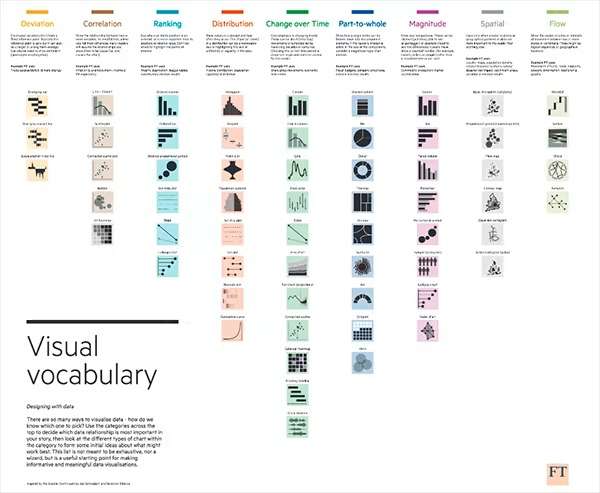
Are you looking for the best way to present some data? How can we decide which data visualization method to use when there are so many options?

To choose which data relationship is most crucial to your story, there are certain categories. Then, take a look at the many types of charts inside each category to get a sense of what could work best.

This list is a helpful place to start when creating informative and relevant data visualization, but it is neither exhaustive nor a magic bullet.

In this guide, the visualizations are arranged by type of data relationship, and then you have a short explanation to guide you in choosing the most appropriate chart.

Categories for Data Visualization

Here are the categories for data visualization.

#1: Deviation

Emphasize deviations (plus/minus) from a constant reference point. The reference point is usually zero, although it can also represent a goal or an average over a long period of time. Also, it is useful for expressing emotion (positive, neutral, or negative).

Example: Trade surplus/deficit, climate change

#2: Correlation Data Visualization

Demonstrates the connection between two or more variables. Be aware that unless you tell them differently, most readers will assume that the connections you present are causative, meaning that one causes the other.

Example: Unemployment and inflation, income and life expectancy

#3: Ranking

Use whenever the order of an item in a list outweighs its relative or absolute value. Therefore, don’t be scared to draw attention to the important details.

Example: Richness, league tables, and outcomes of elections

#4: Distribution

Displays the values in a dataset together with their frequency. In other words, a distribution’s shape (or “skew”) might serve as a memorable approach to drawing attention to the data’s lack of equality or homogeneity.

Example: Population (age/sex) and income distribution

#5: Change Over Time

Puts a focus on evolving trends. These can range from brief (daily) motions to lengthy sequences that span decades or centuries: In order to provide the reader with appropriate background, it is crucial to choose the appropriate time period.

Example: Changes in share prices and economic time series

#6: Part-To Whole Data Visualization

Demonstrates the division of a single entity into its constituent parts. Therefore, consider a magnitude-type chart for data visualization if the reader is just interested in the components’ sizes.

Example: Fiscal budgets, corporate structures, and election results

#7: Magnitude

Display size disparities. These may be related (merely having a vision larger/bigger) or imperative (must see fine differences). Typically, these display a “counted” number (for instance,
barrels, money or individuals) as opposed to a computed percentage or rate.

Example: Market capitalization and commodity production

#8: Spatial Data Visualization

Used for data visualization only when exact geographic locations or data patterns exist that are more significant than everything else in the reader’s eyes.

Example: Locator maps, population density, locations of natural resources, the chance and effect of natural disasters, catchment regions

#9: Flow

Demonstrates to the reader the amounts or rates of change between two or more states or circumstances. These might be physical sites or logical sequences.

Example: Financial flow, commerce, migrant flow, legal disputes, information flow, and connection graphs

Here is an illustration of the data visualization categories.

Conclusion – Data Visualization Is a Must for Finance

Using visual information, data visualization offers a rapid and efficient method for disseminating information across cultures. Additionally, the practice can assist businesses in determining the variables that influence client behavior and identify areas that require improvement or additional attention. Furthermore, it makes data more memorable for stakeholders, figures out the best times and locations to sell particular products, and forecasts sales volumes.

If you want to receive more finance tips like this, feel free to sign up for my newsletter. If you subscribe, every two weeks, you will receive an email from where I share best practices, career advice, templates, and insights for Finance Professionals.

Un étudiant m’a envoyé quelques questions sur mon expérience en Audit. J’ai décidé de prendre le temps de lui répondre par écrit.

Voici mes réponses:

Concernant votre expérience d’auditeur

Quelles ont été vos responsabilités et vos missions principales en tant que manager ?

  • Planifier l‘audit (equipes, risques, timing, rdv clients et partner)
  • Executer l‘audit (revoir les tests d‘audit et la documentation)
  • Conclure l‘audit (preparer rapport d‘audit et reporter les problemes)
  • Suivi du budget
  • Former les equipes (suivi des carrières, feedbacks, donner des formations)
  • Participer aux activités transversales avec les autres managers pour améliorer nos outils et process

Etiez-vous spécialisé dans un secteur d’activité particulier ? Est-ce obligatoire ? Est-il imposé par l’entreprise ? Si non, comment s’effectue le choix de ce secteur pour un auditeur ?

J’étais spécialisé en audit de société d’assurance mais j’avais d’autres industries dans mon portefeuille comme société commerciale ou fonds d’investissement.

En tant que junior, le choix de l’industrie est fait par la société sur base du profil de l’employé. Cependant il est très facile de changer d’industrie en se proposant sur d’autres missions. Il est même possible de se réorienter sur d’autres departement comme consulting.

Est-ce un métier qui a vous passionné ? Si oui, en quoi ? Si non, pourquoi ?

Oui ce métier m’a passionné du fait de la diversité des clients, des équipes et des missions.

Le rythme de travail est intense et les exigences de haut niveau. Cela permet d’apprendre beaucoup et d’évoluer rapidement.

J’appréciais aussi la transparence des etapes a effectuer dans la carrière d’un auditeur: 2 ans de junior, 3 ans de senior et 5 ans de manager avant de passer directeur et plus tard partner.

De plus la possibilité de donner des formations et de participer a des missions de consulting rendait le travail plus intéressant.

Pourquoi avoir choisi PwC Luxembourg ?

A l’époque je rentrais sur le marché du travail en pleine crise financière. Peu d’entreprises voulaient recruter. En France les sociétés d’audit étaient très focalisées sur le classement de l’école dont on sortait. De plus les places étaient limitées.

Plusieurs anciens de mon école qui s’étaient déjà exilés à Luxembourg m’avaient fortement recommandé de les rejoindre du fait de la balance entre challenges professionnels, place financière et côté international du Grand Duché.

De plus, PwC Luxembourg avait fait le pari de recruter malgré la crise. Les entretiens se sont très bien passés et j’ai eu très rapidement une offre. Cela m’a convaincu de les rejoindre!

Votre expérience à Singapour m’intrigue également : Est-ce une possibilité pour chaque auditeur de partir travailler à l’étranger ?

En théorie il est possible pour chaque auditeur de partir à l’étranger. En pratique, seulement une partie des auditeurs le font (environ 10-20%) car ce n’est pas obligatoire et certaines personnes ne sont pas attirées par ce type de challenge.

Avoir de bonnes performances, établir un plan de carrière clair et se focaliser sur une ou deux destinations sont les premiers éléments qui facilitent à partir à l’étranger. Ensuite, il faut trouver des soutiens dans le bureau d’origine et le bureau étranger qui vous accueillera pour concrétiser l’échange.

Quelles destinations sont possibles ?

Il n’y a pas de destinations précises. Il y a des relations historiques et préférentielles qui se créent avec certains bureaux du fait d’un rapprochement des industries et des langues.

Mais en fonction des souhaits des auditeurs et des besoins des bureaux, les destinations peuvent varier.

Cette expérience n’a pas été trop complexe compte tenu des différences comptables et financières entre Singapour et la France ?

Non car Singapour se base sur les IFRS. De plus les règles fiscales et réglementaires auxquelles j’ai eu à faire se basent sur les mêmes principes et mouvements d’idées du commerce international.

Concernant la profession

Un métier qui évolue ? En quoi ? Quelles compétences peuvent aujourd’hui faire la différence et se révéler être un plus ?

Cela fait 4 ans que je ne fais plus d’audit. Mais à l’époque le métier changeait déjà. Comme tous les métiers, tout ce qui est automatisable est ou sera traité par des robots reproduisant tâches manuelles ou des algorithmes analysant des données plus rapidement et avec plus de volumes que ce qu’un humain ne pourrait le faire.

Les compétences à développer selon moi se portent sur 2 axes

  1. Axe humain: compréhension du business, capacité d’adaptation, relation équipe, goût du service au client, appétit pour l’apprentissage, coaching
  2. Axe automatisation/technique: capacité analytique, compréhension de la complexité, gestion de plusieurs langages (humain, business, code), vulgarisation, conceptualisation, modélisation

Quelles sont les perspectives d’évolution (ou de changement) après 5, 10 ans en cabinet d’audit ?

Si je prends mon exemple, il existe des passerelles pour intégrer une fonction finance d’une entreprise (Controlling, comptabilité, reporting, audit interne…).

Les méthodes de travail, les connaissances comptables, les bonnes pratiques et la gestion d’équipes remplissants la malette à outil de l’auditeur sont très appréciées par les entreprises.

L’autre choix est de continuer sa carrière en audit en tant que manager (a partir de 5 ans d’expérience) en continuant jusqu’à directeur et puis partner après 10/15 ans de carrière.

J’ai également répondu à un journaliste de L’Etudiant en 2013 sur mon expérience d’auditeur à l’étranger. Article ici: https://etudiant.lefigaro.fr/orientation/actus-et-conseils/detail/article/audit-conseil-des-evolutions-de-carrieres-express-1680/

The global business community is changing along with the rest of the planet. Although there isn’t a single recipe for a sustainable workforce, several tried-and-true techniques significantly aid in creating and sustaining this culture inside an organization.

As a result, companies must embrace entering new technology eras, gradually create, adapt, and expand – and most importantly, take their staff with them on that trip – in order to not just go forward in this new environment but keep up with their competition.

What Is A Sustainable Workforce?

A workplace that cares about its employees’ health and well-being has a sustainable workforce. It encourages flexibility and provides its workers with an excellent work/life balance. If this method is properly put into practice, it will raise productivity, promote staff retention, and ensure reliable attendance. A sustainable workforce supports a more circular paradigm and looks beyond the one-way talent lifecycle.

How Can You Build A Sustainable Workforce in Your Organization?

Here are four things business leaders can do to build a sustainable workforce.

  1. Become advocates for a modernized education system
  2. Implement fluid and seamless learning opportunities
  3. Instill a top-down approach to learning
  4. Take advantage of AI and machine learning to optimize reskilling

Here is an illustration of the four things you need to build a sustainable workforce.

Become Advocates for A Modernized Education System

We can create flexible education systems as an inherent part of the cultural norm. And also equip workers with the diverse skill sets they’ll unavoidably need for sustainable careers by wisely investing in educational frameworks that enable fresh learning paths and skill-gathering.

Moreover, hard tech skills are a top priority in many institutions today, but in this digitally native culture, success depends on various abilities.

Implement Fluid and Seamless Learning Opportunities

We will constantly need to learn new ways to solve problems in the workplace today, and companies that understand and satisfy their employees’ thirst for lifelong learning will succeed. But providing access to education and training is not enough.

Furthermore, we must discover methods to seamlessly incorporate spontaneous reskilling moments at work. This way, through webinars, video games, or in-person mentor programs, you can build a sustainable workforce.

Instill A Top-Down Approach to Learning

To establish a culture of inquiry and constant learning, executives must “walk the walk” when it comes to reskilling workers. Therefore, change from the top down is the most effective approach to do this and to help build a sustainable workforce.

Take Advantage of AI and Machine Learning to Optimize Reskilling

Employee reskilling is no different in the age of AI when company performance will be more closely correlated with the interaction between humans and robots. Therefore, the training methods and tools that can effectively reskill people can be driven by AI and machine learning technologies which are changing the types of employment that workers will have and building a sustainable workforce.

The Bottom Line – Building A Sustainable Workforce Is A Top Priority

In short, we have learned through the pandemic that employees may complete their tasks without a presence of a manager. The pandemic has also increased workers’ need for adaptability, freedom, and self-direction. Currently, there is a chance to rebuild the world of labor and build a sustainable workforce.

If you want to receive more finance tips like this, feel free to sign up for my newsletter. If you subscribe, every two weeks, you will receive an email from where I share best practices, career advice, templates, and insights for Finance Professionals.

This article is based on the World Economic Forum article.

AI will have an influence on every employee, in every sector of the economy, and in every nation. There are serious worries that AI may completely eliminate jobs.

The unpleasant realities of workforce automation have been widely reported on, especially as it relates to particular job categories and populations. For instance, the Brookings Institution concluded that 25% of all US employment is at risk from automation, with a focus on low-wage workers in roles where duties are routine in character.

According to a different survey, 58% of the positions with the highest risk of automation are held by women.

What Changes Will AI Cause in The Future?

However, here are the coin’s two sides. Humans will lose some professions to robots and AI, but they will also gain new ones as a result. Since 2000, 1.7 million manufacturing jobs have been gradually eliminated thanks to robots and automation technologies.

On the other hand, it is anticipated that by 2025, AI will generate 97 million new employment.

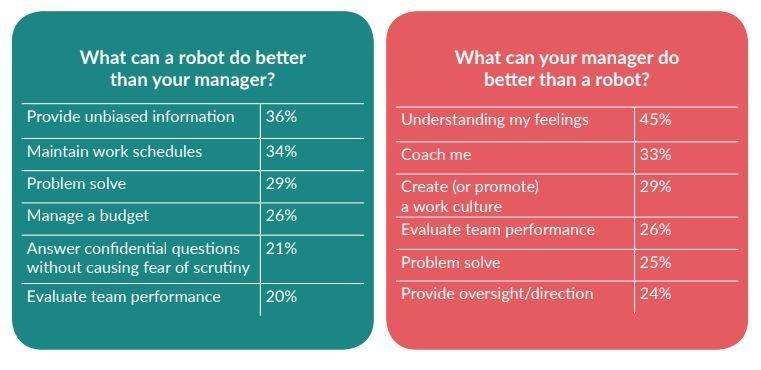
Two-thirds of workers say they trust orders from a robot more than ones from their manager, and half have previously asked counsel from a robot rather than their manager.

At American Express, AI now handles judgments such as determining which product offer is most pertinent to various consumer categories, obviating the need for management and staff to debate these responsibilities.

The role of a manager won’t be replaced by AI; rather, it will be supplemented. In the future workplace, people and robots will collaborate to do tasks more quickly and effectively than ever before.

Artificial intelligence is changing our jobs, and either you adapt, or you get lost!

Here is a table extracted from an article by the World Economic Forum.

The Bottom Line – Artificial Intelligence Will Bring Opportunities

Success in the future of AI will depend on a systematic approach to workflow automation, process optimization, and personnel reskilling. Also, companies will be in a strong position to expand, advance, scale, and flourish as a consequence. It’s a good idea to get in and learn everything you can about using AI if you’re tech-savvy.

If your expertise is in a different sector, it’s crucial to recognize that AI will have a significant influence on your career and that you should strive to master the foundations of how it operates in many industries.

If you want to learn more about finance and the skills you need, you can take my course.

You can read the full article on this topic here.

Free Download

Download This Guide Absolutely Free.

You will be subscribed to my newsletter. Unsubscribe at any time.

Free Download

Enter Your Email Address Below to Start Your Download.

You will be subscribed to my newsletter. Unsubscribe at any time.

Free Download

Enter Your Email Address Below to Start Your Download.

You will be subscribed to my newsletter. Unsubscribe at any time.

Free Download

Enter Your Email Address Below to Start Your Download.

You will be subscribed to my newsletter. Unsubscribe at any time.

Free Download

Enter Your Email Address Below to Start Your Download.

You will be subscribed to my newsletter. Unsubscribe at any time.

Free Download

Enter Your Email Address Below to Start Your Download.

You will be subscribed to my newsletter. Unsubscribe at any time.

Free Download

Download This Resource Absolutely Free.

You will be subscribed to my newsletter. Unsubscribe at any time.

Free Download

Get This Guide Absolutely Free.

You will be subscribed to my newsletter. Unsubscribe at any time.